Kitchen Science
Dry Brining Steak: What Salt Really Does Overnight
Salt a steak 10 minutes before cooking and you get a wet, gray crust. Salt it the night before and you get deep seasoning and a fast sear. Here is the science and the timing.
Salt is the single most important ingredient on a steak, and when you add it matters almost as much as how much. Salting ahead and letting the meat rest uncovered in the refrigerator is called dry brining. In our test kitchen, it is the default for nearly every steak, chop, and roast we develop. Here is what is happening inside the meat and how to use it.
The three stages of salt on meat
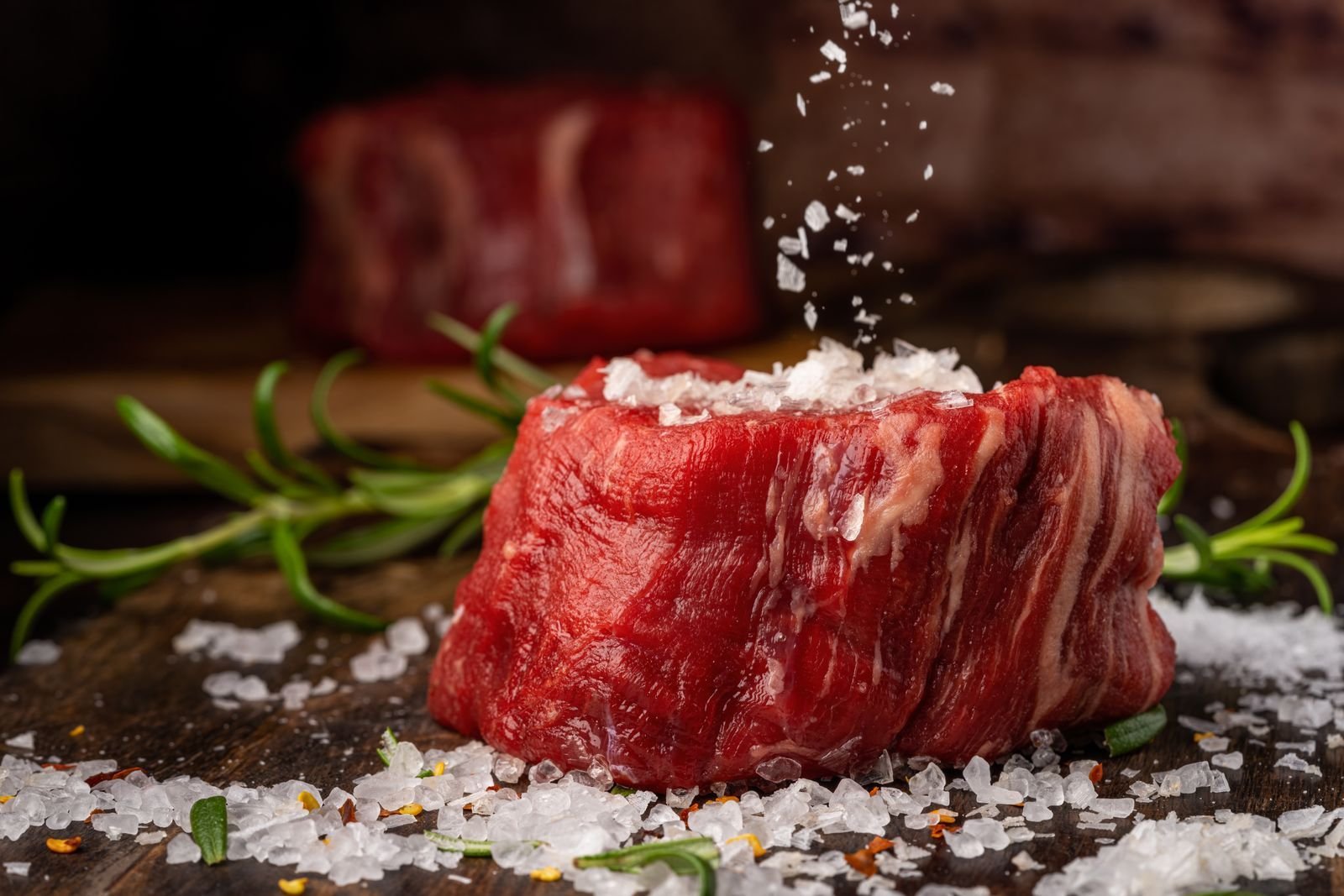
Sprinkle coarse salt on a thick filet like the one in the photo and watch closely over the next hour. The process happens in stages:
- Right away to about 10 minutes: the salt sits on a mostly dry surface. Cook now and the salt seasons the crust but not the interior.
- About 10 to 40 minutes: salt draws moisture out of the surface by osmosis, and beads of liquid collect on top. Cook during this window and that liquid has to boil off first, which delays browning and steams the crust.
- After about 45 minutes: the salt dissolves in that liquid, forming a concentrated brine that begins moving back into the meat. Over the following hours the dissolved salt travels deeper and loosens some muscle proteins so they hold on to more of their own juice during cooking.
The practical takeaway: salt immediately before cooking, or at least 45 minutes ahead. Avoid the middle.
How much salt to use
A reliable starting point is 3/4 teaspoon of coarse kosher salt per pound of meat, or about 1/2 teaspoon of fine sea salt, since fine crystals pack more into a spoon. For a 1 1/2-inch strip steak weighing 14 ounces, that is a generous 1/2 teaspoon of kosher salt spread over both sides and the edges.
Sprinkle from about 12 inches above the meat, the way you would dust flour. Height spreads the crystals evenly instead of in clumps.
Timing guide
- Thin steaks under 1 inch: 45 minutes to 4 hours.
- Thick steaks and chops, 1 to 2 inches: overnight, 12 to 24 hours.
- Whole roasts such as prime rib or pork loin: 24 to 48 hours.
- Poultry: 24 hours for a whole chicken, 2 to 3 days for a turkey.
Going longer does not ruin meat, but after 3 or 4 days a steak starts to take on a firm, almost cured texture at the surface.
Why uncovered matters
Set the salted meat on a wire rack over a sheet pan and leave it uncovered in the refrigerator. Cold, dry refrigerator air pulls moisture from the surface and leaves a thin, dry skin on the outside of the steak. A dry surface browns fast. In our kitchen, dry-brined steaks build a dark crust in a 500 F cast iron pan noticeably sooner than steaks salted at the last minute, which means less time for the meat under the crust to overcook.
Keep the meat on the lowest shelf, away from anything ready to eat, and give it space so air can circulate around it.
Common questions
Will salting early dry out my steak?
No. The surface dries, which is what you want. The interior keeps its moisture, and in side-by-side cooks the dry-brined steak usually tastes juicier because it is seasoned all the way through.
Should I add pepper and other seasonings too?
Salt alone is best for the overnight rest. Black pepper, garlic powder, and dried herbs can go on right before cooking. Fresh garlic and herbs scorch on a very hot surface, so save them for basting with butter at the end.
What about marinades?
Most marinade flavor stays within the outer few millimeters. The salt in a marinade does the deeper work. If you love a garlicky mojo on skirt steak, it still pays to salt the steak first and use the marinade for a shorter time.
Does this work on ground meat?
Not in the same way. Salt mixed into ground beef hours ahead dissolves proteins and makes burgers springy and sausage-like. Season burger patties on the outside just before they hit the grill.
Salt early, leave it uncovered, and pat dry before cooking. Three small habits, one noticeably better steak.