Traditions
Picanha: Why the Sirloin Cap Rules Our Sunday Grill
Picanha, the top sirloin cap with its thick fat layer, is a Sunday regular around Doral. How to buy it, score and salt it, grill it on skewers or as steaks, and slice it right.
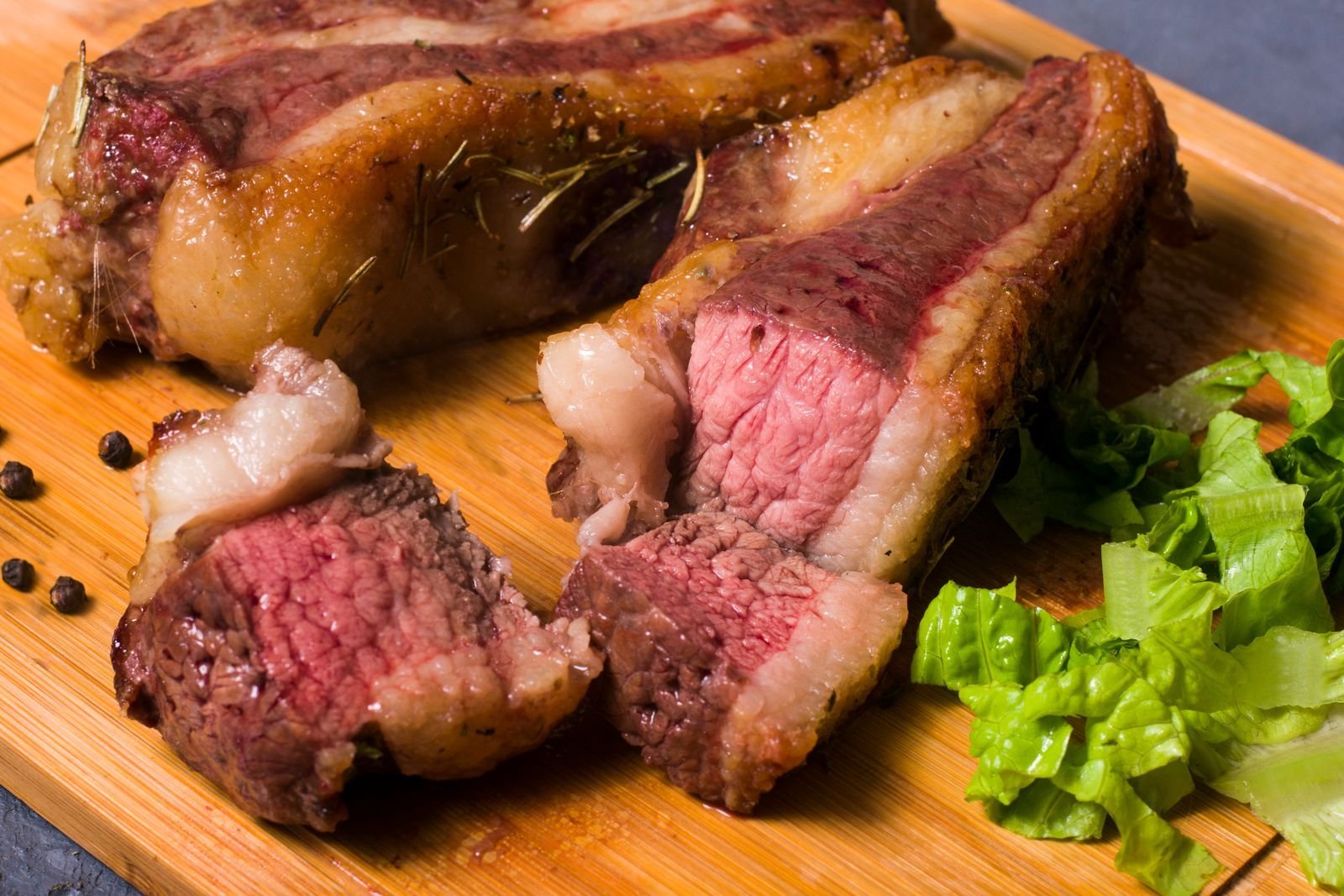
Order picanha at a Brazilian steakhouse and it arrives folded on a long skewer, fat cap crackling. Ask for it at many American supermarkets and you may get a blank look. Around Doral that is changing, as neighbors with roots in Brazil, Argentina, and Venezuela have made this cut a Sunday regular. Here is what it is, how to buy it, and how we grill it.
What picanha is
Picanha is the top sirloin cap, a triangle-shaped muscle that sits on top of the sirloin toward the rump. In American butcher terms it is often sold as top sirloin cap or coulotte. What sets it apart is the thick layer of fat on one side. As the cut cooks, that fat bastes the meat, and the result is rich beef flavor, a tender but meaty bite, and a crisp, salty edge.
How to buy it
- A whole picanha usually weighs 2 to 3 pounds. Much bigger than that, and extra sirloin muscle has likely been left attached.
- Look for a fat cap about 1/2 to 3/4 inch thick. Do not let anyone trim it off; it is the point of the cut.
- The meat should be deep red with visible marbling. The fat should be white to creamy, firm, and dry to the touch.
- If your market does not display it, ask the butcher. Many will cut one from a whole top sirloin with a day of notice.
Prep the cut
Pat the picanha dry. With a sharp knife, score the fat cap in a crosshatch about 1 inch apart, cutting through the fat but not into the meat. Scoring helps the fat render and lets salt reach deeper.
Next, look at the grain, which runs along the length of the triangle. Cut the roast with the grain into steaks about 1 1/2 inches thick. That way, when you slice each cooked steak for serving, you will be cutting across the grain.
The salt
Tradition calls for coarse rock salt and nothing else. Coat each steak generously, fat included, about 1 teaspoon per steak. Let it sit 45 minutes at room temperature, or up to overnight uncovered in the refrigerator. Before grilling, knock off any crystals that have not dissolved.
Two ways to grill
Churrasco style, on skewers
Bend each steak into a C shape with the fat on the outside and thread it onto a flat metal skewer; two or three steaks fit on one skewer. Grill over a medium-hot charcoal fire, about 400 F to 450 F, turning every few minutes, until the fat is golden and crisp and the meat reaches 125 F to 130 F for medium-rare, about 20 to 25 minutes total. At the table, carve thin pieces from the outside and return the skewer to the fire for the next round.
As steaks, on a kettle
Build a two-zone fire. Start the steaks fat side down on the indirect side for 3 to 4 minutes to begin rendering, watching closely for flare-ups. Move them over direct heat and sear 3 to 4 minutes per side. Finish on the indirect side with the lid closed until they reach 125 F to 130 F. If you prefer to follow the USDA guideline, cook whole cuts of beef to 145 F and rest 3 minutes.
Rest and slice
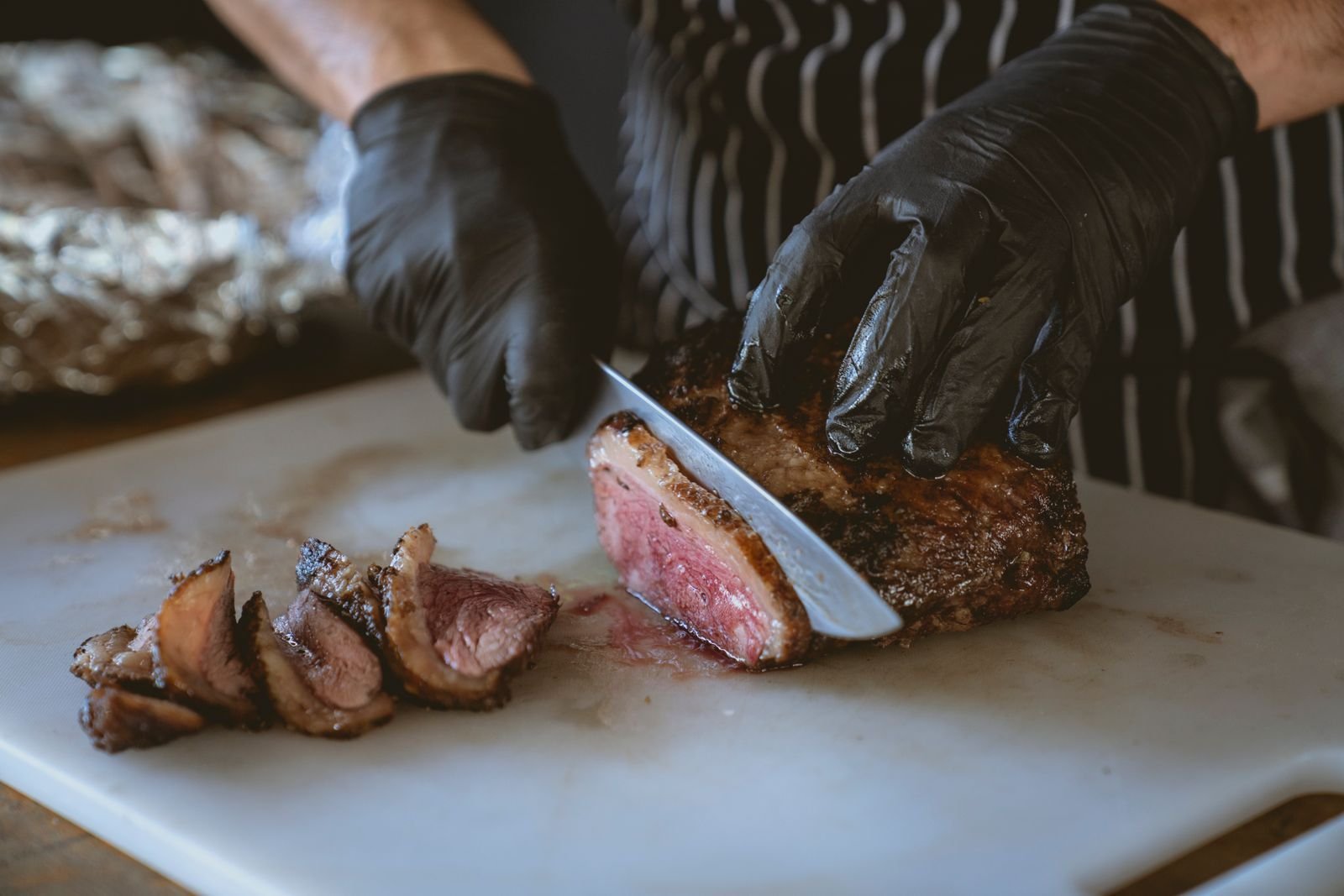
Rest the steaks 5 to 8 minutes on a board, fat side up. Slice across the grain about 1/2 inch thick so every slice has a strip of crisp fat at the top and a rosy center, just like the slices in the photo.
What to serve alongside
- Farofa: cassava flour toasted in butter with onion and bits of bacon.
- Vinagrete: diced tomato, onion, and green pepper dressed with vinegar and oil.
- Chimichurri: parsley, garlic, oregano, and red pepper flakes for the Argentine side of the table.
- Rice and black beans, plus a simple green salad.
Leftover slices, if there are any, make an excellent steak sandwich the next day on a toasted roll with a spoonful of that chimichurri.
Keep the fat, keep the salt simple, and slice against the grain. Picanha does the rest.