Technique
Resting and Slicing Meat: The Five Minutes That Matter Most
Great cooking can fall apart in the last few minutes. How long to rest steaks, roasts, and poultry, how to find the grain on tricky cuts like tri-tip and brisket, and how to slice cleanly.
You can buy the right cut, season it perfectly, and nail the temperature, then lose half the result in the last five minutes. Resting and slicing are where a lot of good cooking quietly goes wrong. After editing hundreds of recipes, I can say these are the steps readers most often skip, and they are also the easiest to fix.
Why meat needs to rest
When meat cooks, the muscle fibers tighten and push juices around inside the cut. Slice into a steak straight from a hot pan and those loose juices run out onto the board. Give it a few minutes and the temperature evens out, the fibers relax slightly, and the juices thicken just enough to stay put when you slice.
Resting also finishes the cooking. Heat stored in the outer layers keeps moving inward, which is called carryover cooking. A thick steak can rise about 5 degrees after it leaves the heat; a large roast can rise 10 degrees or more. That is why our recipes tell you to pull meat before it reaches your target.
How long to rest
- Thin steaks, chops, and chicken cutlets: 3 to 5 minutes.
- Thick steaks, pork tenderloin, and bone-in chicken breasts: 5 to 10 minutes.
- Roasts such as beef tenderloin, pork loin, or leg of lamb: 15 to 20 minutes.
- Whole turkey, prime rib, and brisket: 30 minutes to 1 hour. Brisket and pork shoulder benefit from even longer holds, wrapped in towels inside an empty cooler.
The USDA safe minimum temperatures to keep in mind are 145 F with a 3-minute rest for whole cuts of beef, pork, and lamb, 160 F for ground beef and pork, and 165 F for all poultry.
Where to rest it
Set meat on a wire rack or a cutting board rather than a flat plate. On a plate, the bottom sits in its own juices and the crust you worked for turns soft. For roasts, tent loosely with foil. Wrapping tightly traps steam and softens the crust.
Finding the grain
The grain is the direction the muscle fibers run, visible as fine parallel lines across the surface. Slicing across the grain cuts those fibers into short pieces so each bite is tender. Slicing with the grain leaves long fibers that feel chewy, even on a perfectly cooked cut.
Take a moment to note the grain direction before cooking. After a good sear the lines can be hard to see under a dark crust.
Cuts where it matters most
- Flank and skirt steak: long, obvious fibers. Slice across the grain about 1/4 inch thick, on a slight angle for wider pieces.
- Tri-tip: the grain changes direction near the middle. Cut the roast in two where the fibers shift, then slice each piece across its own grain.
- Brisket: the flat and the point run in different directions. Separate them, then slice each against the grain, about as thick as a pencil.
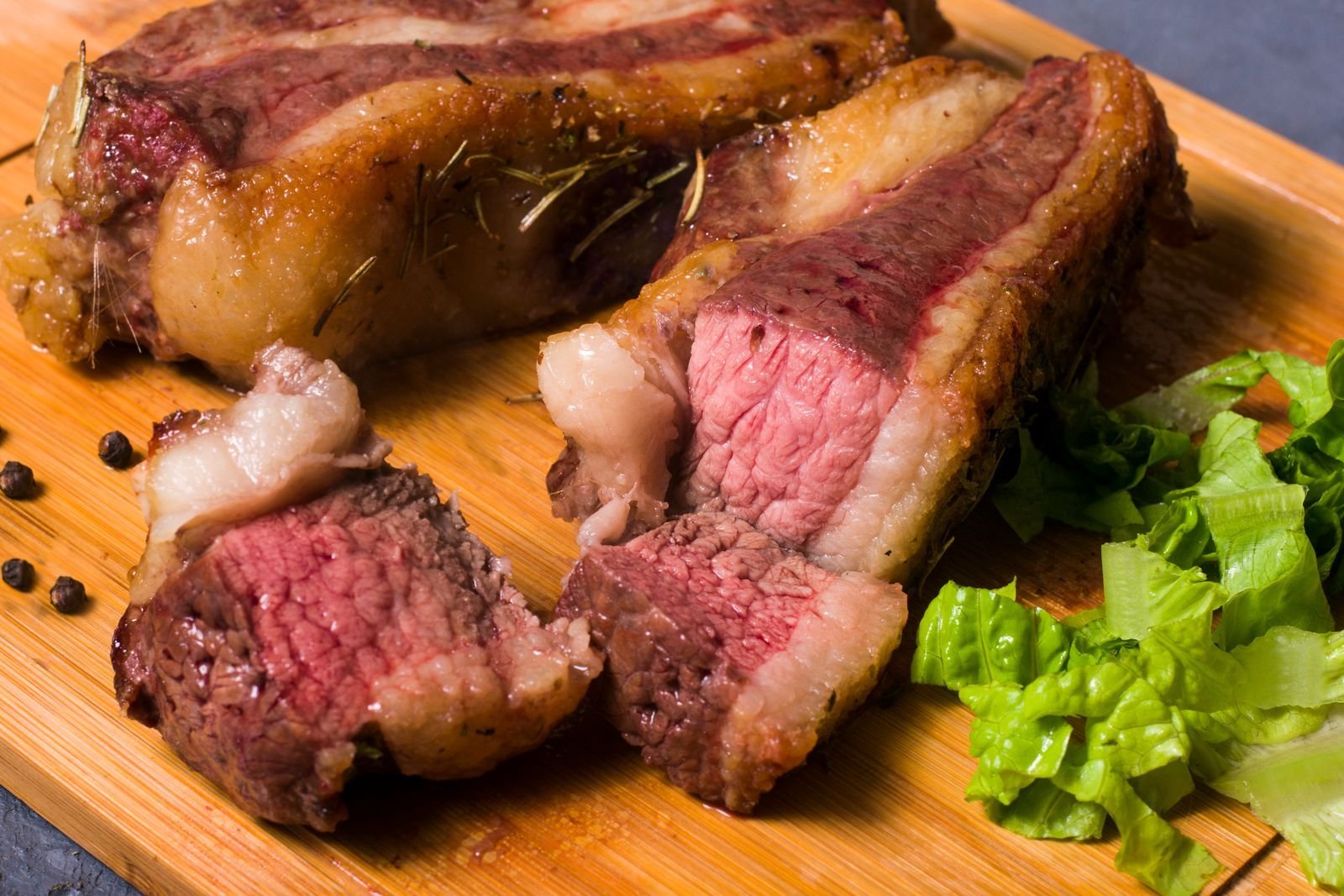
- Picanha: slice with the fat cap on top, against the grain, about 1/2 inch thick.
- Beef and pork tenderloin: the grain runs the length of the roast, so simple crosswise slices, 1/2 to 3/4 inch thick, are correct.
The slicing itself
- Use a long, sharp knife, either a carving knife or a chef's knife at least 8 inches long. A sharp blade cuts through the crust instead of tearing it.
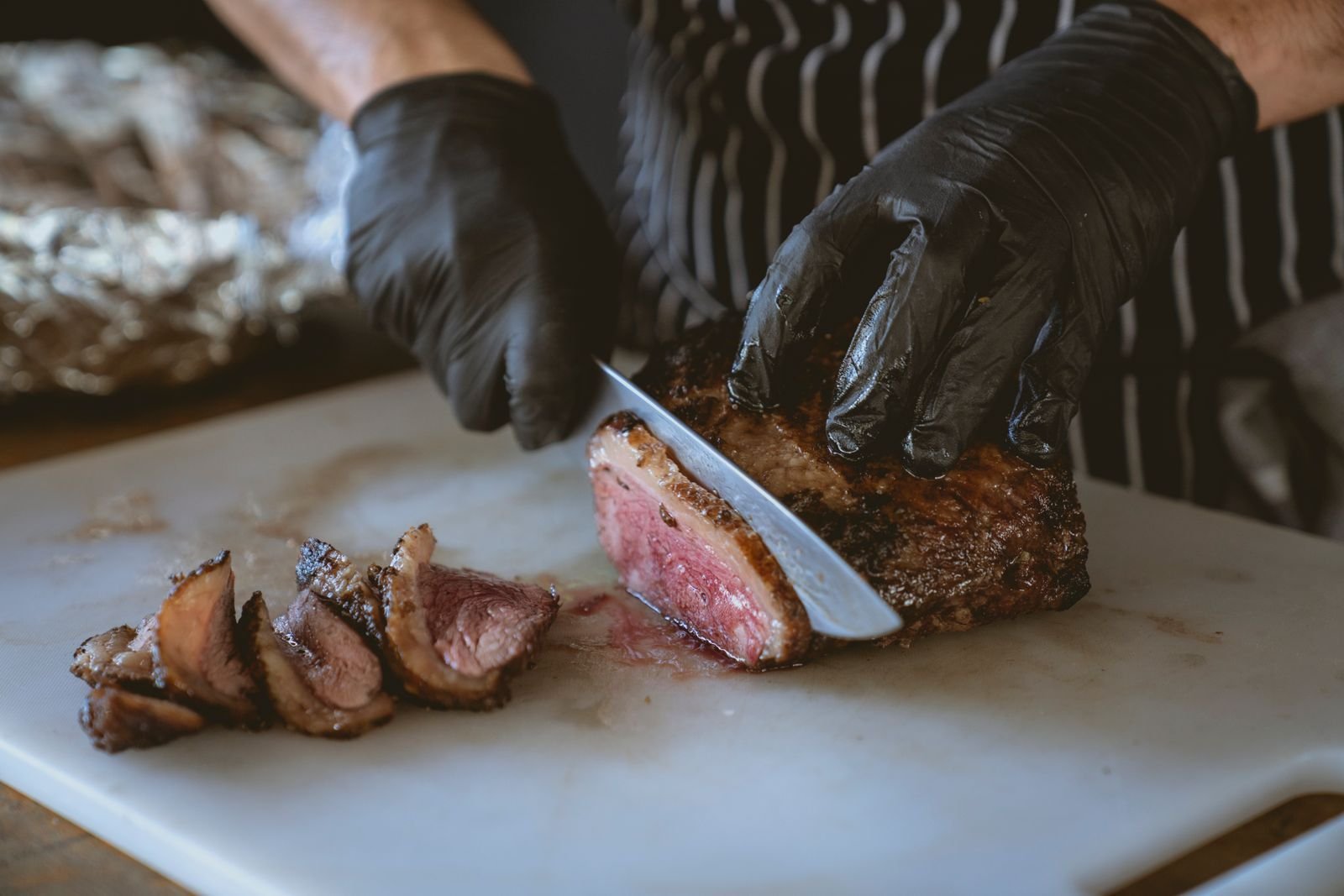
- Steady the meat with a carving fork or a gloved hand, keeping your fingers well clear of the blade.
- Use long, smooth strokes, drawing the knife back toward you rather than pressing straight down.
- Slice only what you will serve right away. Unsliced meat stays warmer and juicier on the board.
Use a board with a juice groove, and pour whatever collects over the sliced meat or into a pan sauce. Those juices are full of flavor.
Rest it, find the grain, and slice with a sharp knife. Every recipe we publish assumes you will.