Buying Guide
How to Pick a Great Steak From the Butcher Case
Marbling, thickness, color, and a few smart questions. A butcher's checklist for choosing ribeye, strip, sirloin, and more, plus how to store steaks once you get them home.
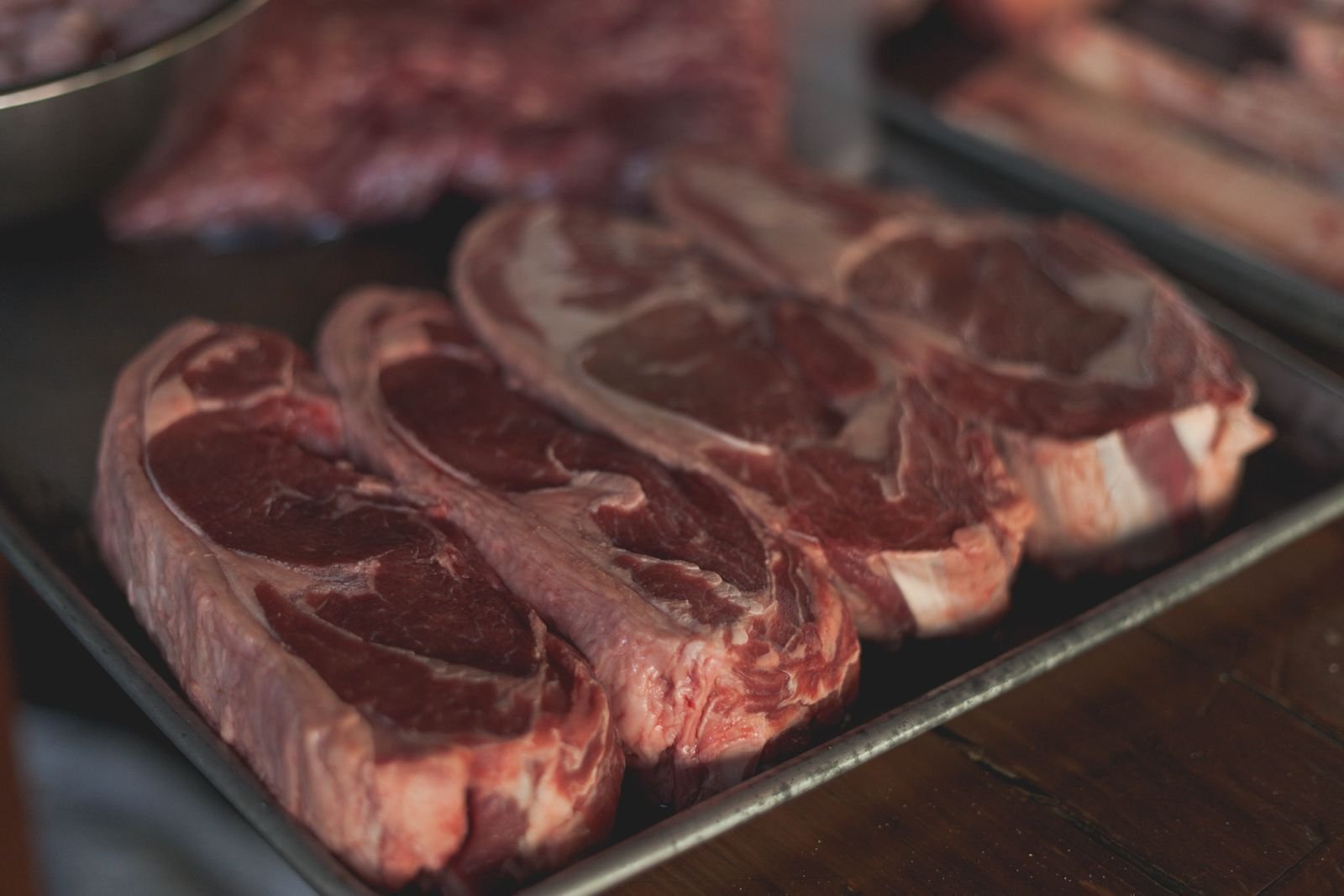
Standing in front of a full meat case can feel like a test you did not study for. Rows of red steaks, different prices, labels that mean different things. The good news is that picking a great steak comes down to a handful of things you can see with your own eyes, plus two or three questions worth asking.
Look at the marbling first
Marbling is the fine white fat woven through the muscle, not the thick band on the edge. Fine, evenly spread flecks melt during cooking and keep the steak juicy. Big isolated chunks do less. When two ribeyes sit side by side, pick the one where the fat looks like lace rather than islands.
USDA grades give you a starting point. Prime has the most marbling, Choice is the everyday workhorse, and Select is lean. Within Choice there is a wide range, so a well-marbled Choice ribeye can eat better than a thin Prime strip. Trust your eyes over the sticker.
Thickness matters more than weight
For searing or grilling, buy steaks 1 1/4 to 1 1/2 inches thick. Thinner steaks overcook in the time it takes to build a crust. If the case only has 3/4-inch steaks, ask for one cut thicker. Any butcher with a whole subprimal in the back can do it in a minute, and you pay the same price per pound.
Also check that the steak is even from edge to edge. A steak that tapers from 1 1/2 inches down to 3/4 inch will be medium-well on one end while the other end is still rare.
Color and moisture
Fresh beef exposed to air is bright cherry red. Beef in vacuum packaging looks purplish because it has not met oxygen yet; open the bag and it blooms red within about 20 minutes. Neither color is a problem. What you want to avoid:
- Brown or gray patches across the surface of a steak in an open tray.
- A lot of red liquid pooled in the tray, called purge. A little is normal; a lake suggests the meat has been sitting a while or was frozen and thawed.
- A sticky or slick surface, or any sour smell.
- Dry, darkened edges that suggest the steak was cut days ago.
Know the cuts in the case
Here is the short version of the steaks you will see most often:
- Ribeye: the richest, with a fat-laced cap. Great on a hot grill or in cast iron.
- New York strip: tighter grain, beefy, a firm chew and a fat strip along one side.
- Tenderloin: very tender and mild. Best with a sauce or a salty crust.
- Top sirloin: lean, flavorful, and a good value for weeknights.
- Skirt and flank: thin, loose-grained, and made for marinades, fast heat, and slicing across the grain.
- Chuck eye: cut right next to the ribeye, with similar flavor at a lower price when you can find it.
Questions worth asking
- When was this cut? Steaks cut that morning will hold longer in your refrigerator.
- Can you cut it thicker? Almost always yes.
- What else is good today? A counter often has something from a fresh subprimal that has not made it into the case yet.
Getting it home
Keep steaks cold on the ride home and put them in the coldest part of the refrigerator, usually the back of the bottom shelf. Cook fresh steaks within two or three days. If you need longer, wrap each one tightly in plastic, then in foil or a freezer bag, and freeze. Thaw overnight on a plate in the refrigerator, never on the counter.
For the best crust, unwrap steaks the night before, salt them, and leave them uncovered on a rack in the refrigerator. The surface dries, the salt seasons deeper, and you get a better sear. Cook to your preferred doneness; the USDA recommends 145 F with a 3-minute rest for whole cuts of beef, while many steak lovers pull at 125 F to 130 F for medium-rare.
The best steak in the case is the one that is thick, evenly marbled, and cut recently. Everything else is detail.