Behind the Counter
Knife Work at the Counter: How We Trim a Beef Roast
Silverskin, hard fat, and an uneven cap are the reasons roasts cook badly. Here is how we trim beef at the counter, step by step, and how to do it at home with a boning knife.
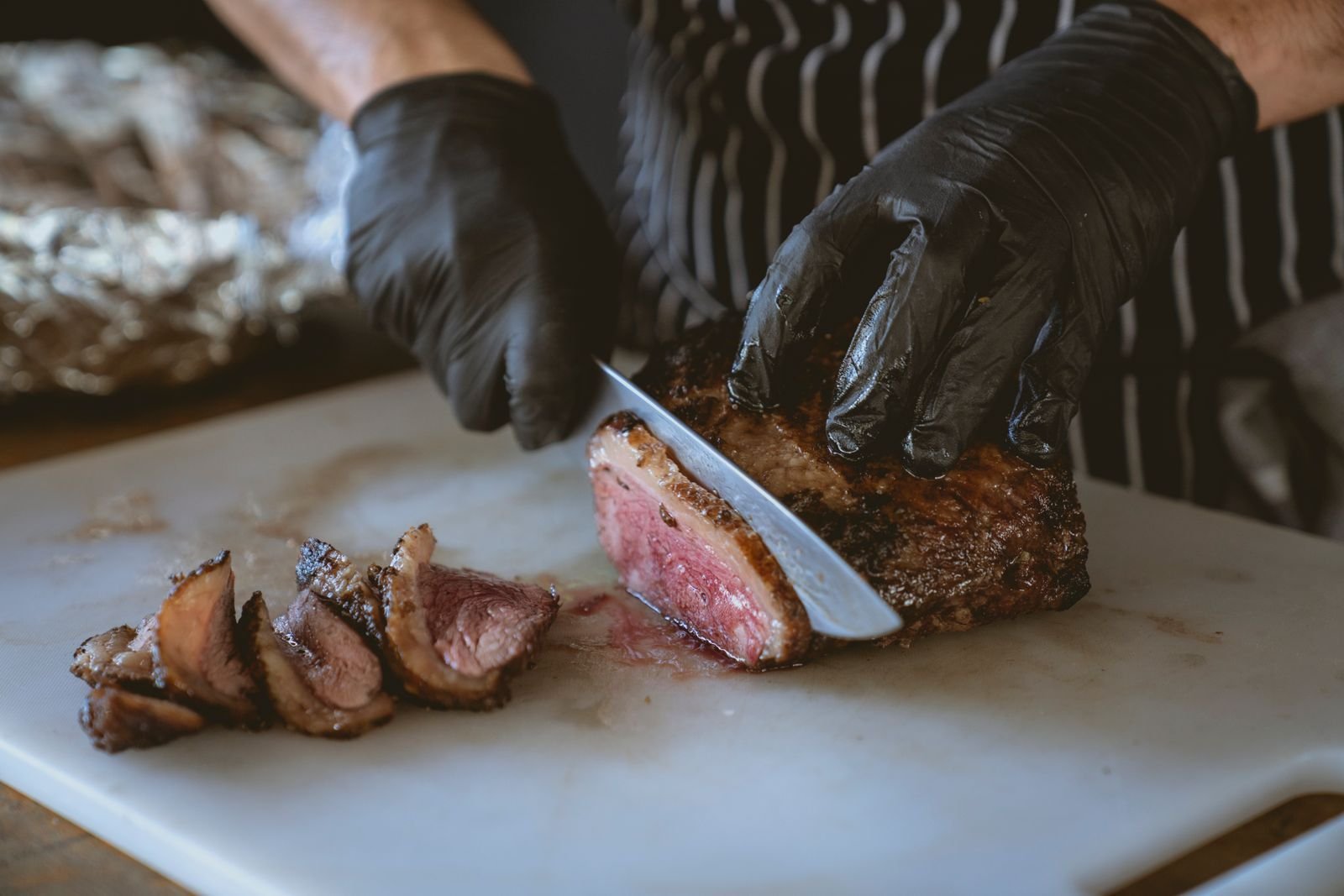
Most of what happens behind our counter is not glamorous. It is a sharp knife, a cold roast, and a few minutes of patient trimming before anything goes into the case. That trimming is the difference between a roast that cooks evenly and carves cleanly and one that curls, chews, and leaves a puddle of rendered fat in the pan. Here is how we do it, and how you can do the same at home with a supermarket roast.
Start cold, start sharp
Trim meat straight from the refrigerator, ideally between 34 F and 38 F. Cold fat is firm and separates from the muscle in clean sheets; warm fat smears and grabs the blade. If a roast has been sitting on the counter while you gather tools, put it back for 20 minutes.
For knives, a 6-inch semi-flexible boning knife does most of the work. The flex lets the blade follow the curve of a muscle without gouging it. Hone it before you start and again halfway through. A dull knife is the reason people end up sawing away good meat along with the silverskin.
Read the roast before you cut
Set the board on a damp towel so nothing slides. Turn the roast over a few times and look for three things:
- Silverskin, the thin, shiny connective membrane. It does not melt during cooking and shrinks hard, which makes roasts bow and steaks cup.
- Hard fat, the thick, waxy pockets between muscles. It renders poorly in a short roast and tastes greasy.
- The fat cap, the even layer on one face. This is worth keeping in moderation.
Removing silverskin
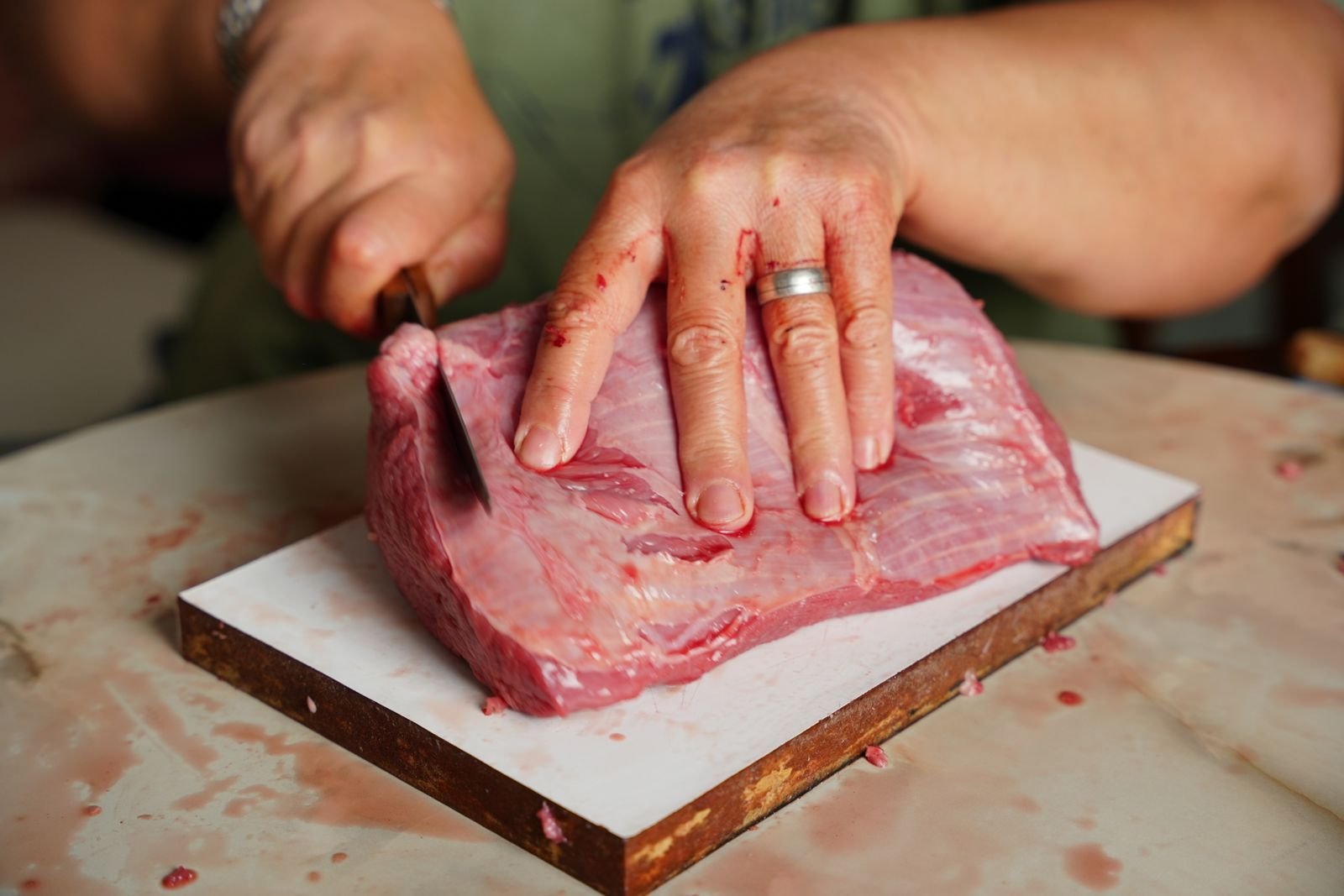
Slide the tip of the knife under one end of the membrane and free a tab about an inch long. Grip that tab with a paper towel in your other hand. Now turn the blade so the edge points slightly up, toward the silverskin, and push forward in long, shallow strokes while you pull the tab back and up. The upward angle is the whole trick: it keeps the edge against the membrane instead of diving into the muscle.
Work in strips about an inch wide. On an eye of round or a whole beef tenderloin you might pull off eight or ten strips. It is slow the first time and takes under five minutes once your hands learn it.
Trimming the fat cap
We leave about 1/4 inch of fat on most roasts. That is enough to baste the surface and brown well in a 450 F oven, and not so much that the outside turns flabby before the center reaches temperature. On a brisket flat or a top sirloin roast, run the knife parallel to the board and shave the cap down in thin passes rather than trying to take it off in one thick slab. Hold the blade flat, use your free hand to lift the trimmed fat away, and check thickness by pinching the edge.
If the cap is uneven, aim for uniform rather than minimal. A roast with 1/4 inch on one end and 3/4 inch on the other will cook unevenly no matter what you do.
Squaring up and tying
Thin tails and loose flaps overcook. Either tuck them under and tie the roast, or cut them off and save them. Tie with butcher twine every 1 1/2 inches, snug enough to hold a round shape but not so tight that the meat bulges between loops. A tied roast of even thickness can go straight into the oven and come out a consistent medium-rare from end to end.
Nothing goes to waste
At our counter, trim is sorted as we work:
- Lean scraps with a little fat go into a bowl for grinding. Freeze them flat in a bag until you have a pound or two for burgers or picadillo.
- Clean white fat can be rendered slowly over low heat into tallow for frying potatoes.
- Silverskin and gristle go in the trash. They add nothing to a stock that bones do not add better.
Trim for how the meat will cook, not for how it looks in the package.
Finally, wash your board, knife, and hands in hot, soapy water before touching anything else. Raw beef trimmings travel farther than you think, and the minute it takes to clean up keeps your salad greens and serving platters safe.
If you are ever unsure, ask your butcher to trim a roast while you watch. Most of us are happy to show you, and after one demonstration you will be comfortable doing it yourself.