Grill Notes
Low and Slow Pork Ribs on a Charcoal Kettle
No smoker? No problem. The snake method turns a standard charcoal kettle into a steady 250 F cooker for tender spare ribs and baby backs, with a bend test to tell you when they are done.
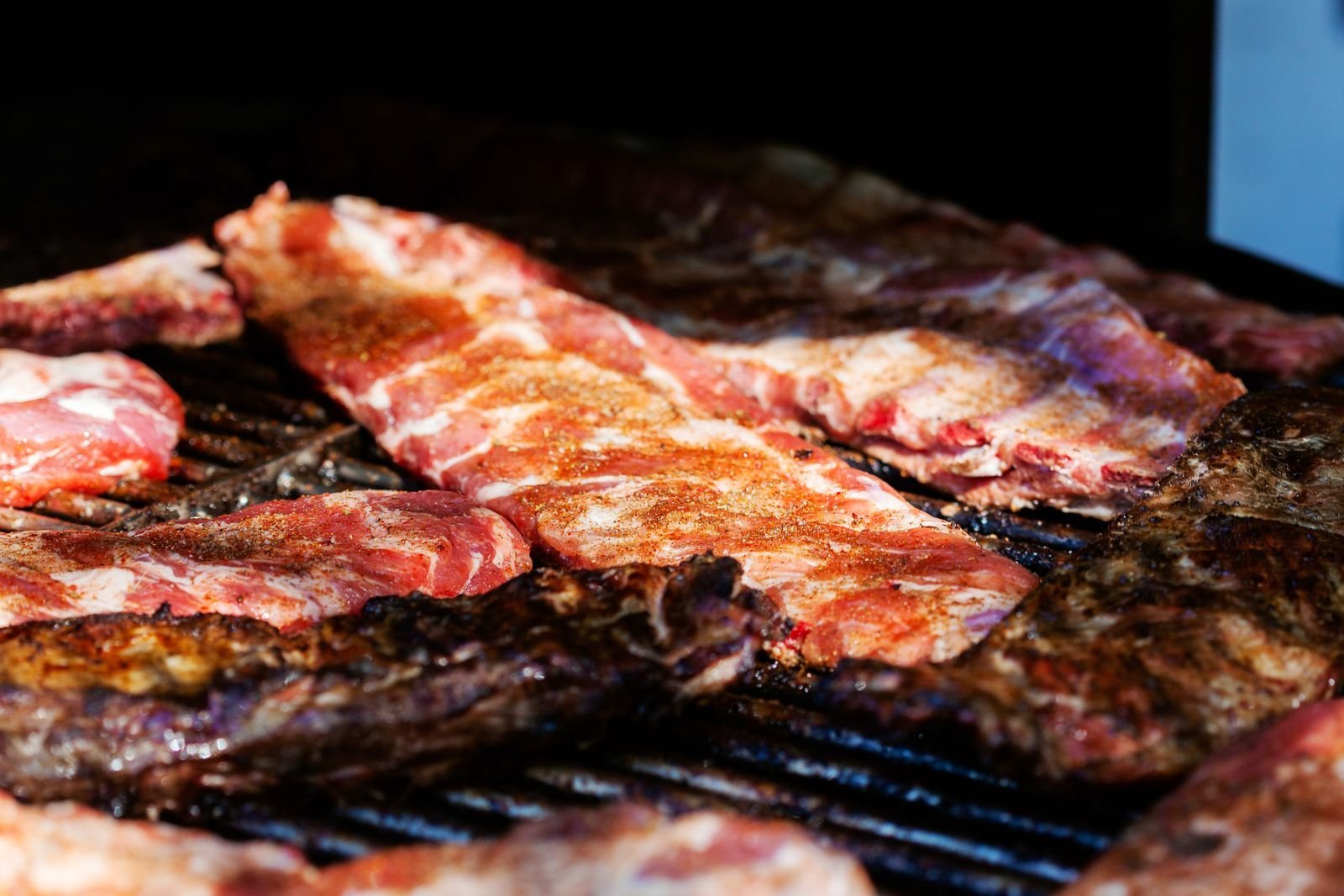
You do not need a dedicated smoker to make tender, smoky ribs. A standard 22-inch charcoal kettle holds steady low heat for hours if you set it up right, and the ribs that come off it can stand up to anything from an offset pit. This is our method for St. Louis-cut spare ribs and baby backs, and it works on a lazy weekday afternoon as well as a Saturday.
Pick your ribs
- Baby backs come from high on the ribcage near the loin. They are smaller, leaner, and cook in about 4 to 5 hours.
- Spare ribs come from the belly side. They are flatter, fattier, and carry more flavor. Ask for them St. Louis cut, which means the cartilage-heavy rib tips are removed so the rack is rectangular and cooks evenly. Plan on 5 to 6 hours.
Look for racks with meat covering the bones well and no bare bones poking through the surface, which butchers call shiners.
Prep the night before
Flip the rack bone side up. Slide a butter knife under the thin membrane on the back of the bones near one end, lift it, grab it with a paper towel, and pull it off in one sheet. Trim any loose flaps of meat that would dry out.
Season with a simple rub. For two racks, mix 3 tablespoons kosher salt, 3 tablespoons coarse black pepper, 2 tablespoons paprika, 1 tablespoon garlic powder, and 2 tablespoons brown sugar. Apply a light, even coat on both sides, wrap, and refrigerate overnight, or for at least 2 hours.
Set up the snake
The snake method turns a kettle into a slow-burning smoker:
- Arrange unlit briquettes around the inside edge of the charcoal grate in a C shape, two briquettes wide and two high. The C should run about two-thirds of the way around.
- Lay three or four fist-size chunks of hardwood such as hickory, oak, or a fruitwood on top of the snake near the starting end.
- Place a small foil pan of water in the open center of the charcoal grate.
- Light 8 to 10 briquettes in a chimney. When they are ashed over, pour them onto one end of the snake.
- Close the lid with the top vent positioned over the meat. Set the bottom vent about a quarter open and the top vent half open.
Aim for 250 F to 275 F at grate level, measured with a probe clipped near the ribs rather than with the lid thermometer. Adjust only the bottom vent, in small moves, and give each change 15 minutes to settle.
The cook
Lay the racks meat side up over the water pan, away from the lit end. If they do not fit flat, a rib rack that stands them on edge works well. Close the lid and leave it closed for the first 2 hours; every peek loses heat and smoke.
After that, spritz with apple juice or diluted cider vinegar every 45 minutes if the surface looks dry. You are looking for a deep mahogany bark that does not rub off when you touch it.
To wrap or not
Once the bark is set, around the 3-hour mark for spares, you can wrap each rack in foil with a few tablespoons of apple juice and a little butter. Wrapping speeds up the cook and makes the ribs softer. Leaving them unwrapped gives a chewier bite and a firmer crust. Both are correct; it comes down to taste.
Knowing when they are done
Time is only a guide. Use two checks:
- The bend test. Pick up the rack with tongs about a third of the way in. It should sag deeply and the surface should crack, but the rack should not fall apart.
- Probe tenderness. A thermometer probe slides between the bones with almost no resistance, usually when the meat reads 195 F to 203 F.
If you like sauce, brush on a thin layer in the last 20 minutes and let it set. Rest the ribs 10 minutes, then slice between the bones with the rack bone side up so you can see exactly where to cut.
Ribs reward patience and punish peeking. Build a steady fire, close the lid, and let the smoke do its job.