Technique
Searing Steak in Cast Iron Without Smoking Out the Kitchen
A cast iron skillet gives the best indoor crust, but it can also set off every smoke alarm. Dry steaks, the right oil, a patient preheat, and frequent flipping fix most of the problem.
A cast iron skillet gives you the best indoor steak crust you can get, and it can also set off every smoke alarm in the house. Most of that smoke is avoidable. It comes from the wrong oil, too much of it, a wet steak, or a pan that is hotter than it needs to be. Here is how we sear in the test kitchen on a regular home range with an ordinary hood fan.
Choose the right pan
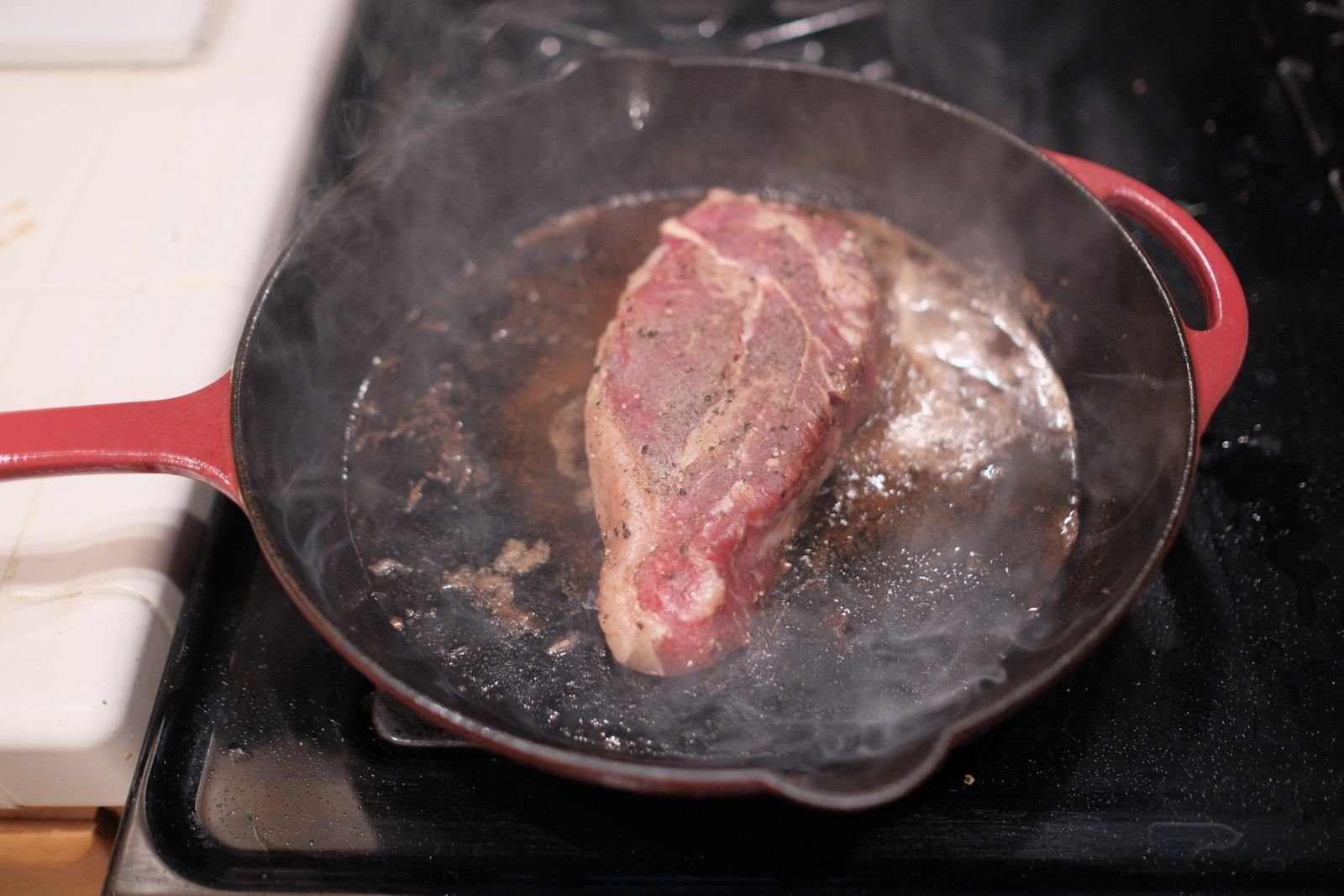
Bare cast iron and enameled cast iron both hold heat well, which keeps the pan from cooling down when a cold steak hits it. Bare cast iron tolerates very high heat. Enameled pans, like the red-handled skillet in the photo, sear beautifully too, but the enamel does best at medium-high rather than a blasting burner, and it should never sit empty over high heat for long. A 10- or 12-inch skillet fits two steaks without crowding.
Prep the steak
- Pick steaks about 1 1/4 inches thick. Ribeye, strip, and top sirloin all work; so do chuck eye and flat iron.
- Salt ahead if you can, overnight and uncovered in the refrigerator, or right before cooking.
- Take the steaks out 20 to 30 minutes before cooking and pat them completely dry with paper towels. Moisture on the surface turns into steam and smoke.
- Trim thick edge fat to about 1/4 inch. Excess fat renders into the pan and starts smoking quickly.
Heat the pan gradually
Put the skillet over medium heat for 3 minutes, then raise it to medium-high for another 2 to 3 minutes. Gradual heating warms the whole pan instead of creating a scorching spot in the center. Test with a drop of water: it should skate across the surface and vanish within a couple of seconds.
Turn the hood fan on high and crack a window before the steak goes in, not after the smoke starts.
Oil: less and later
Use a neutral oil with a high smoke point, such as avocado, peanut, or refined canola. Skip extra-virgin olive oil and butter at this stage. Instead of pouring oil into the pan, rub about 1 teaspoon directly onto each steak. The pan gets only what it needs, and there is no puddle to burn.
The sear
- Lay the steak in the pan, placing it away from you. It should sizzle loudly. If it does not, pull it out and heat the pan a little longer.
- Leave it for 2 minutes without moving it, until the underside is dark brown and evenly crusted.
- Flip and sear the second side for 2 minutes. Use tongs to hold the steak on its edge for 30 seconds to render the fat strip.
- From here, flip every 30 to 60 seconds until the center reaches your target. Frequent flipping evens out the cooking and keeps the gray band under the crust thin.
- In the last 90 seconds, lower the heat to medium and add 2 tablespoons butter, 2 smashed garlic cloves, and a sprig of thyme or rosemary. Tilt the pan and spoon the foaming butter over the steak again and again.
Temperatures to pull at
Use an instant-read thermometer inserted from the side into the center. Pull the steak about 5 degrees before your goal, since it keeps cooking as it rests.
- Rare: pull at 115 F to 120 F
- Medium-rare: pull at 125 F
- Medium: pull at 135 F
- Medium-well: pull at 145 F
The USDA guideline for whole cuts of beef is 145 F followed by a 3-minute rest. Rest steaks 5 minutes on a wire rack or warm board before slicing.
When smoke still happens
If the pan starts pouring smoke, it is too hot or rendered fat has built up. Lower the heat a notch, carefully pour the fat off into a heatproof bowl, and keep going. A thin haze is normal; billowing smoke is your signal to adjust.
Caring for the pan
While the steak rests, let the skillet cool until it is just warm. Wipe out the fat, scrub with hot water and a brush, and dry it over a low burner. For bare cast iron, rub in a few drops of oil before storing. Enameled pans only need to be clean and dry.
High heat builds the crust. Dry meat, a little oil, and a patient preheat keep the kitchen clear.