Grill Notes
Taming Flare-Ups With a Two-Zone Charcoal Fire
Flames around a steak look dramatic but leave a sooty, bitter crust. A two-zone charcoal fire gives you a hot side for searing and a safe side for when the fat starts to catch.
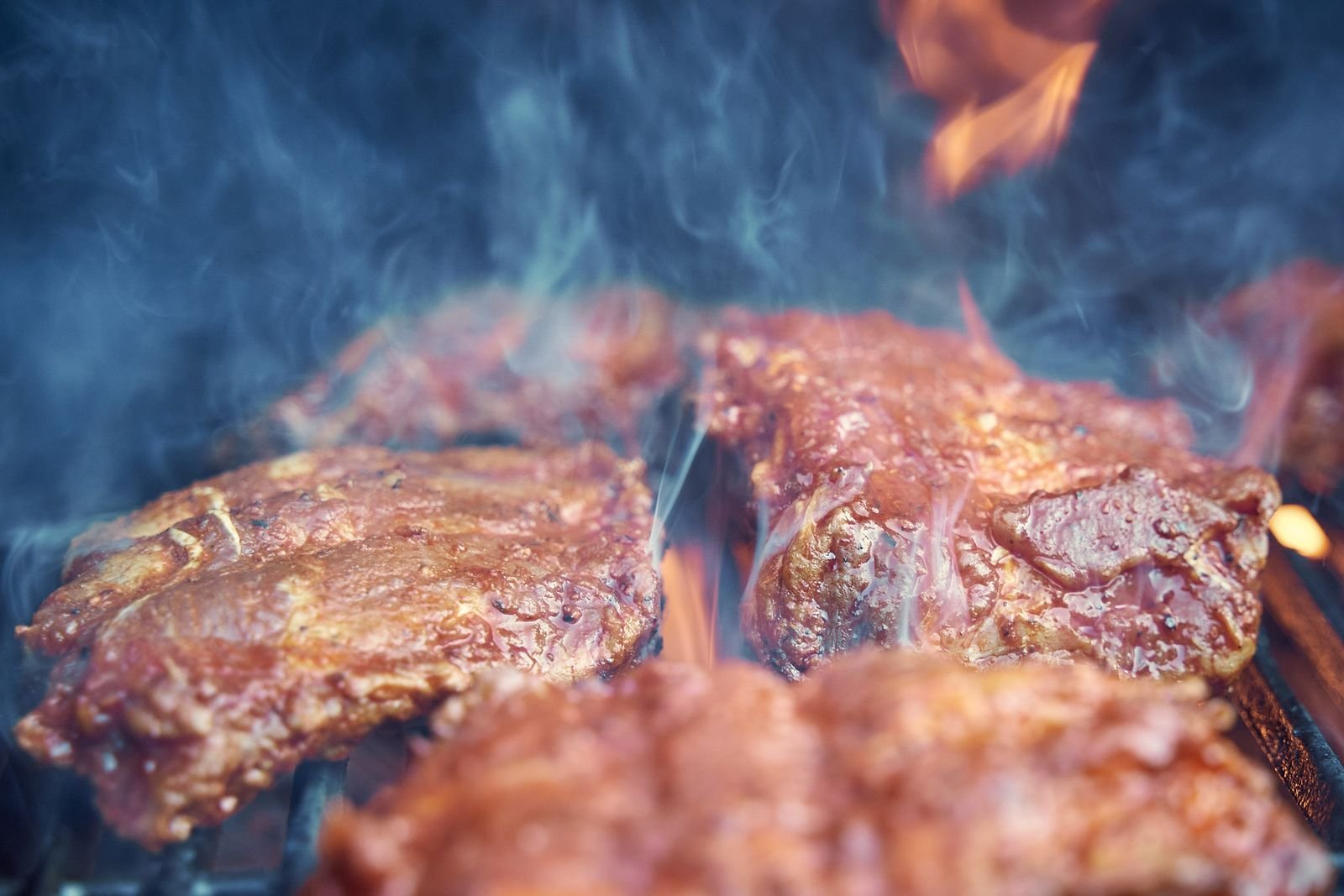
Flames licking up around a steak look great in photos. On the plate they usually mean a sooty, bitter crust and an outside that burned before the center got warm. Flare-ups happen when fat drips onto hot coals and ignites. You cannot stop fat from dripping, but you can control what happens next, and the answer is a two-zone fire.
What a two-zone fire is
Instead of spreading coals evenly across the grate, bank them all on one side of the grill. That side becomes your direct zone, hot enough to sear. The other side has no coals underneath and becomes your indirect zone, a safe place to move food when flames jump or when a thick cut needs gentle heat to finish.
Building it on a kettle
- Fill a chimney starter about three-quarters full with lump charcoal or briquettes and light it. Wait until the top coals are covered in gray ash, about 15 to 20 minutes.
- Pour the coals onto one half of the charcoal grate and spread them into an even layer. For a hotter sear, pile them two layers deep.
- Set the cooking grate in place, close the lid with the top vent fully open, and let it heat for 5 minutes.
- Scrub the grate clean with a brush, then wipe it with a folded paper towel dipped in oil and held in tongs.
The direct side should sit around 500 F to 600 F. Without a thermometer, hold your palm about 5 inches above the grate. If you have to pull away in 2 to 3 seconds, it is ready for steaks.
Managing flames in real time
When fat catches and flames climb around a steak, do not reach for a spray bottle. Water kicks ash up onto the meat and can damage a hot porcelain-coated bowl. Instead:
- Move the steak to the indirect side for 20 to 30 seconds until the flames die down, then slide it back.
- Close the lid briefly. Less oxygen means smaller flames. Keep the lid on no more than a minute while searing, or the steak starts to bake.
- Trim excess fat before grilling. A ribeye with a thick exterior fat edge will flare far more than one trimmed to 1/4 inch.
- Go easy on oil. Pat steaks dry and brush on a thin coat, or skip it and oil the grate instead. Oily marinades are the worst offenders.
Timing a 1 1/2-inch steak
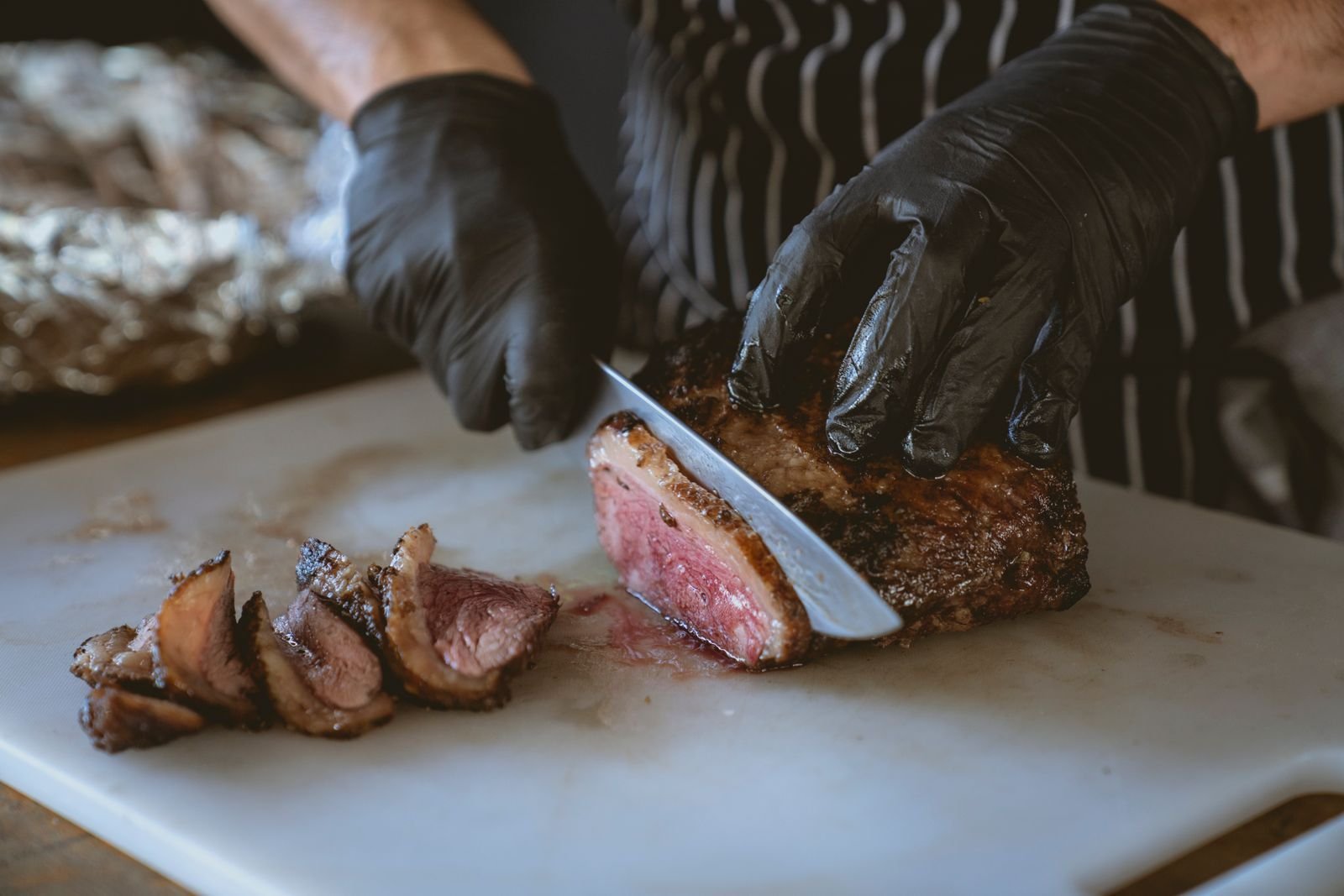
For a thick ribeye or strip, sear on the direct side for about 2 minutes per side, rotating 45 degrees halfway for crosshatch marks if you like. Then move it to the indirect side, close the lid, and let it coast. Check with an instant-read thermometer in the thickest part. Pull at 120 F to 125 F for medium-rare; the temperature will climb about another 5 degrees as it rests. If you prefer to follow the USDA guideline, cook whole cuts of beef to 145 F and rest for 3 minutes.
For very thick cuts, 2 inches and up, flip the order. Start on the indirect side with the lid on until the center reaches about 110 F, then finish over the coals for a hard sear. This reverse sear keeps the gray band under the crust thin.
Sugar is the other flame
Not every black crust comes from fat. Sauces and rubs heavy in sugar scorch quickly over direct coals. If you are grilling chicken thighs or pork chops with a sweet glaze, cook them through on the indirect side and brush the sauce on only in the last few minutes over direct heat.
Cleaning up for next time
Once the grill is completely cool, empty the ash. A deep bed of old ash blocks the bottom vents, starves the fire of air, and makes it harder to hold steady heat. Clean vents and a clean grate make the next fire easier to control.
A good grill cook is not the one who never gets flare-ups. It is the one who always has somewhere to move the meat.
Most weekends in our Doral backyard, the kettle looks exactly like this: a pile of glowing coals on one side, nothing on the other, and a pair of tongs doing a lot of quiet shuffling back and forth.